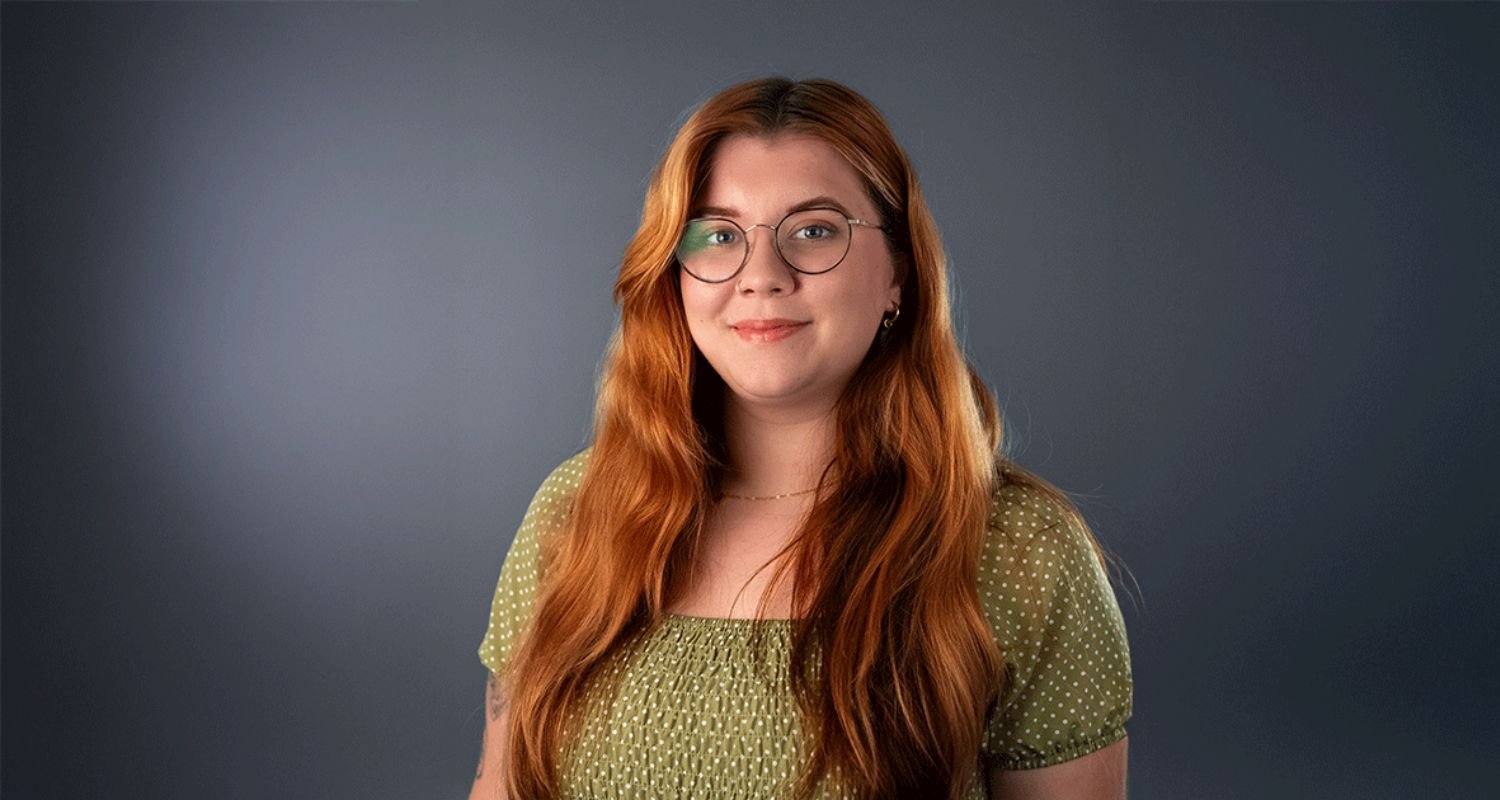
Meet the mentee: Bethany Squires, The Whiskey Wash
From lacking in confidence to feeling isolated in the industry, Bethany Squires now feels like she deserves her journalist title. The deputy editor of The Whiskey Wash discusses how she overcame personal challenges, what it means to be part of a community, and how she intends to use her platform to shine a light on other women.
OurWhisky Foundation: Hi Bethany! Tell us a bit about yourself.
Bethany Squires: I grew up just north of Birmingham, in the Black Country, with a love of literature and performing arts. Outside of work, I love to read and take walks (especially when I am visiting my family and I can take my two amazing Schnauzers, Bear and Bumble, out for a stroll).
I moved to Manchester in 2020 after completing my English Literature & Creative Writing degree at Keele University. My main reason for moving was for work. I completed an internship with Mark Littler Ltd in my third year of university, and was offered a full-time position later that year.
OWF: What were your thoughts on your future career when you were growing up?
BS: I have always wanted to be a writer. My ultimate goal in life was (and still is) getting a novel published. As such, as a teenager I decided that I wanted to work in publishing.
Truthfully, I never really considered journalism. My view of the profession was rather two-dimensional, assuming that I would always be covering current affairs, politics, economics, global conflicts, etc… I also worried about the exploitative side of journalism, worried that I would end up working for a tabloid that didn’t echo my morals. It never occurred to me that I could specialise in such a specific type of journalism.
OWF: When did your love of whisky begin and why?
BS: Perhaps unlike many in the industry, I didn’t drink whisky when I started working at Mark Littler Ltd, apart from the occasional JD & Coke. I was still at university, after all!
In my early years in the industry, my role was much more focused on brokerage, valuations and investment education. I was fascinated by the technical aspects of production, the history attached to the various different categories of whisky and the people that made the industry what it is today. I think it is fair to say that my love of whisky really began before I had even tasted a drop of single malt.
Once I transitioned to my current role at The Whiskey Wash, which is much more consumer focused, my eyes were opened to the sheer volume and variation in whisky styles and profiles. It was an incredible feeling to use the knowledge that I had gained in my job to explore my palate and decide which whiskies were for me.
“My principal reason for applying for the Atonia Programme was to build my confidence in my abilities and knowledge, so that I could take ownership of the word ‘journalist’.”
OWF: What does your role entail?
BS: As deputy editor of The Whiskey Wash, I am responsible for the day-to-day running of the site. I manage guest writers, create and edit content, maintain the content stream, build relationships with PR firms and brands, and work with my boss to build content strategies for the site.
OWF: Why did you apply for the OurWhisky Foundation Atonia Programme?
BS: When I began my role as deputy editor of The Whiskey Wash in late 2023, I had no journalistic experience, and yet was running an established website. If you read my articles, you might think I was the most confident whisky writer ever. But, behind the screen, I was struggling to call myself ‘a whisky journalist’.
My principal reason for applying for the Atonia Programme was to build my confidence in my abilities and knowledge, so that I could take ownership of the word ‘journalist’ without feeling the dreaded imposter syndrome.
I was also excited to build connections in the industry. Living in Manchester, I can sometimes feel cut off from the rest of the industry with the hubs of activity in the UK being Scotland and London. The programme gave me the opportunity to build on my networking skills, put myself out there and say, “Here I am!”
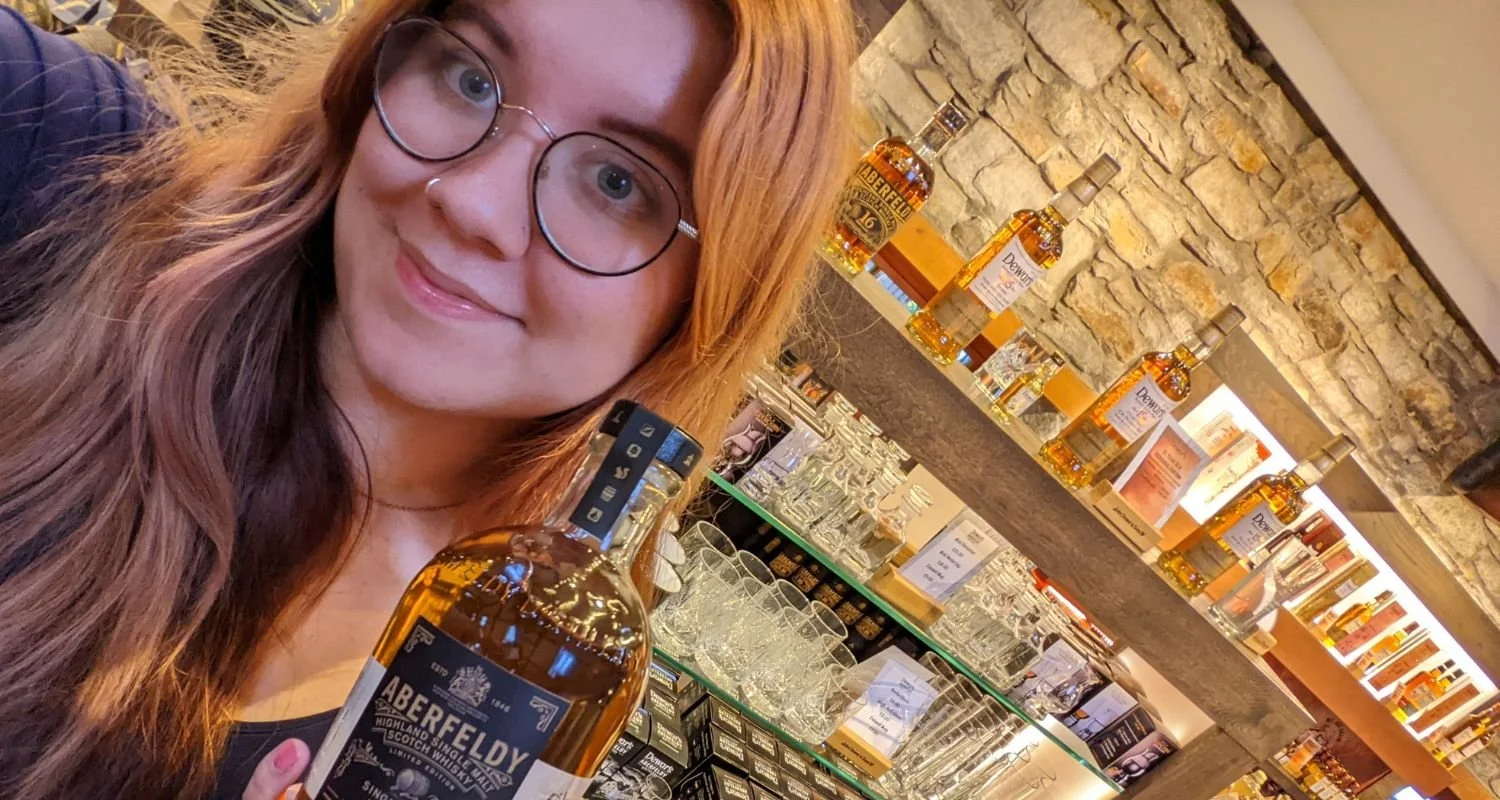
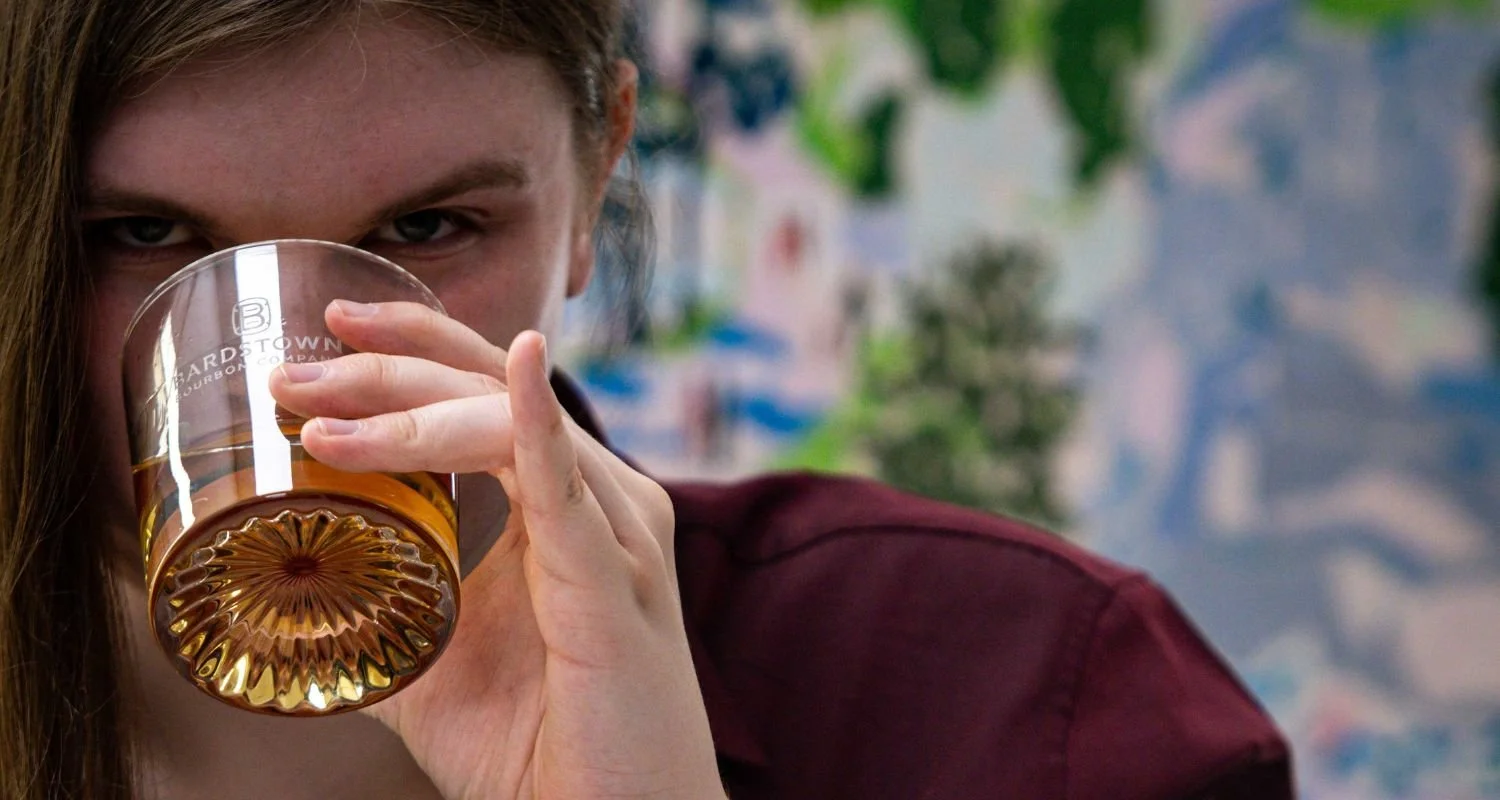
Calling on confidence: Squires has finally gained the confidence to give her voice to her writing and grow her profile in the industry.
OWF: What were the biggest challenges for you in progressing?
BS: My confidence, or lack thereof, has been a huge barrier for me. I very much struggled with imposter syndrome, and that in turn led to me experiencing huge anxiety over airing my thoughts and opinions like most whisky journalists and writers do.
Additionally, one of my goals was to become a visible and respected journalist. But, I have always struggled with my self image. So, the idea that to be visible, people would need to see and recognise my face, was terrifying. I think that being a woman had a huge effect on my worries over how I would be perceived.
Another one of my worries was in relation to my role in the media. I worried that, when approaching someone from a brand or distillery in a professional manner, they had much more to offer me than I had to offer them. I felt very much on the outskirts of the industry trying to worm my way in, not inside of it.
OWF: How did you work with your mentor to overcome these?
BS: Melita Kiely, editor of The Spirits Business and my mentor, was so helpful in helping me overcome these barriers. She understood and empathised with my feelings, and we implemented a step-by-step plan to help me move forward.
This plan included setting up a whisky-centric Instagram (@bethwriteswhisky), giving my opinion more freely in my articles and reframing my perspective on comments that might upset me. It also involved me putting myself out there more at events — going up to brand ambassadors, producers, and other whisky writers to introduce myself, ask questions and see if there was a way we could work together. Some amazing partnerships have stemmed from these events.
OWF: What was your first ‘a-ha!’ moment in the programme?
BS: My first ‘a-ha!’ moment was when I was completing some homework for The Power Room sessions, run by the fantastic Lucy Cox. Our task was to ask 10 people close to us questions about how they perceive us. I noticed that family members, colleagues, my boyfriend, and friends all told me that they’ve seen me at my best when I was pushed out of my comfort zone. They also said that this is the area in which I could push myself more.
It truly made me think, because I am certainly a creature of habit, and pushing myself out of my comfort zone is one of the hardest things for me to do. However, according to others, it is also where I thrive. So, I resolved to keep pushing in the knowledge that taking the leap sometimes brings out the best in me.
OWF: What was your favourite part of the programme?
Without a doubt, meeting some of the other amazing women and non-binary people in this industry among my cohort. Even though our calls were virtual, we all got to know each other really well. Everyone was open, supportive and helpful. I genuinely looked forward to our chats every week.
Many of the girls have also turned out to be valued connections in the industry. Going from feeling incredibly isolated to having a vast network of women in whisky was amazing. You truly don’t know who is out there until you build up the courage to poke your head through the door.
Also, the Power Room was incredible. I cannot overstate how much it helped me.
OWF: What has been your biggest win during the Atonia Programme?
BS: Personally speaking, I am proud of myself for seeking out and attending whisky events that I had been invited to. I used to be a happily anonymous figure behind a desk. Now, I love getting out there, meeting new people and seeking out amazing whiskies that tell amazing stories.
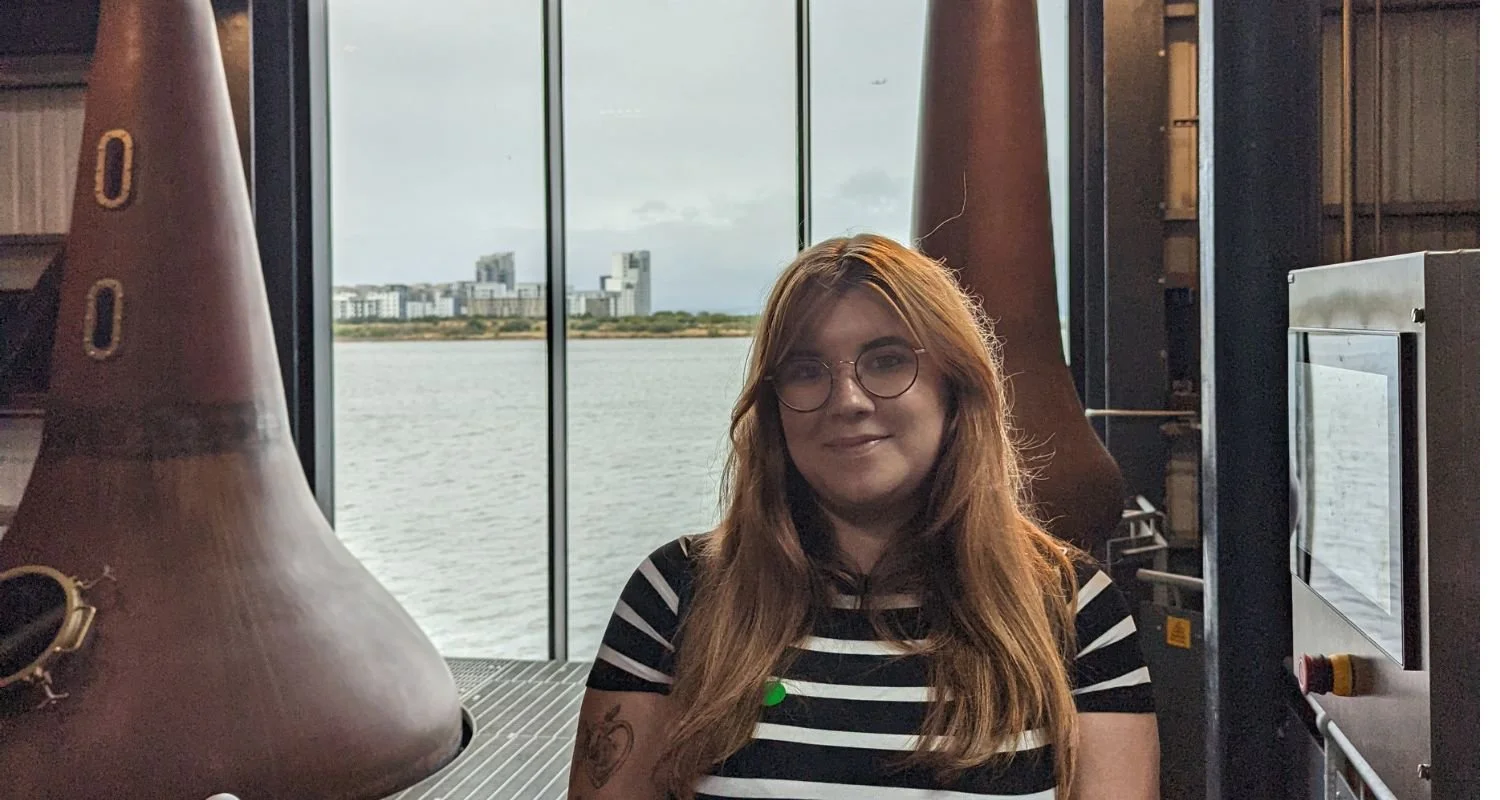
Levelling up: The programme has also helped Squires recognise the role she has to play in shining a light on others.
OWF: What are you working on at the moment?
BS: One of my big hopes for 2026 is that The Whiskey Wash can grow our UK audience. We are very well-established in the USA and India, and I would love for UK-based whisky lovers to know who we are and what we do.
Personally, I am hoping to level up my reviewing game in 2026. Having tasted some fantastic whiskies in 2025, and having written my own private tasting notes, I would love to start publishing my own reviews on The Whiskey Wash.
OWF: What advice would you give someone applying for or starting the programme?
BS: You get out what you put in. It may be scary, but if you throw yourself headfirst into the programme, you may well be surprised how much you can grow in just six months. Participate as much as you can, build a solid foundation with your mentor, keep in touch with the other Acorns, and just have fun!
“Going from feeling incredibly isolated to having a vast network of women in whisky was amazing. You truly don’t know who is out there until you build up the courage to poke your head through the door.”
OWF: How has this programme empowered you to empower others?
BS: Throughout the programme, I realised that I have the perfect platform to empower and showcase diverse, inclusive and sustainable distilling practices and products. If I could just overcome my imposter syndrome and lack of confidence, I could use The Whiskey Wash to amplify the voices that are so often unheard in this industry.
As an example, I was given the opportunity to interview Dr. Dawn O’Neal of New Dawn Distilling in 2025. Dawn is a former environmental advocacy worker who, through her passion for whiskey, realised that it could be the perfect tool for education around sustainable business practices. New Dawn Distilling is a black, female-owned operation with a mission that I truly believed in. So, I was thrilled to write about my chat with Dawn on The Whiskey Wash.
OWF: What are your hopes for the future for women working in whisky?
BS: My hope is that we quickly move past the stage where being a woman in this industry is seen as a novelty. I’d love for the 'raised eyebrows' to disappear and for women to have the rock-solid confidence to speak up in a room full of men, challenging gender bias whenever they encounter it.
On a personal level, I hope we can stop gatekeeping how women enjoy their dram. I used to worry that drinking a highball or adding water was feeding into gender stereotypes, but I’ve realised that whisky is entirely subjective. I want a future where no woman has to apologise for her preferences or answer the question, 'Do you even like whisky?' ever again.
DISCOVER MORE FROM THE CUT